
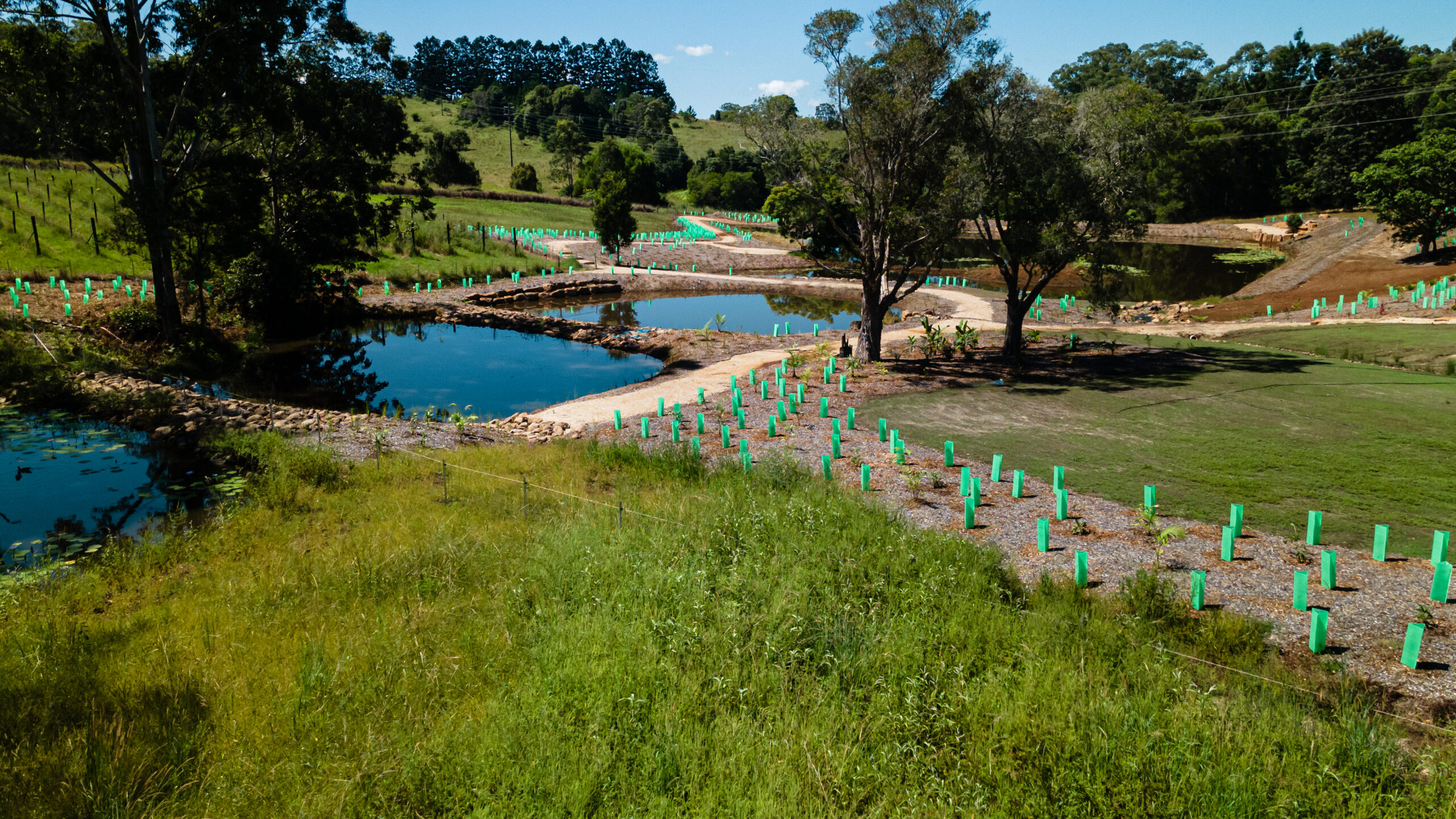
For homeowners across the Northern Rivers, finding the right drainage solutions Byron Bay and the broader region demands has become one of the most pressing landscaping challenges of the past few years. After the devastating 2022 floods — and the many smaller inundation events that followed — thousands of property owners are rethinking how their land manages water. Not just how to clean up after a flood, but how to design and plant their outdoor spaces so that when the rain comes hard and fast, as it inevitably will in a subtropical climate, the landscape is ready for it.
This is not just about aesthetics. It is about protecting your home, preserving your soil, reducing erosion, and creating an outdoor environment that can absorb, redirect, and recover from heavy rainfall with as little damage as possible. Here is what Northern Rivers homeowners need to know.
Understanding Why the Northern Rivers Floods
The Northern Rivers region sits at the intersection of several factors that make flooding a recurring reality. The landscape is characterised by broad, flat floodplains — particularly around the Richmond, Wilson, and Tweed river systems — that were formed over thousands of years by regular inundation. The region also receives some of the highest annual rainfall in New South Wales, with intense summer storm events capable of dropping hundreds of millimetres in just a few days.
Add to this the region’s heavy clay soils, which become saturated quickly and drain slowly, and you have a landscape that is genuinely vulnerable to water pooling, runoff, and flooding — even on properties that are not located on a formal floodplain.
Understanding your site is the first step. Is your property low-lying or on a slope? Where does water naturally flow when it rains heavily? Are there areas that regularly pool or stay wet long after rain? Are there existing drainage structures — pipes, channels, swales — and are they functioning as intended? These questions should inform every landscaping decision you make.
The Role of Landscaping in Flood Management
Many homeowners think of flood management as an engineering problem — pipes, pumps, retaining walls, and concrete channels. And while those elements certainly have a role to play, the landscape itself is one of the most powerful tools available for managing water. Well-designed outdoor spaces can slow the movement of water across a site, encourage it to infiltrate into the soil, direct it away from vulnerable structures, and absorb it through strategic planting.
This is the philosophy behind what is often called water-sensitive urban design, and it is increasingly being applied at the residential scale across the Northern Rivers. Rather than fighting water with hard infrastructure, the idea is to work with natural hydrological processes — to design landscapes that function more like the natural environment, where water is absorbed, filtered, and slowly released rather than rushing across impervious surfaces and overwhelming drainage systems.
For Northern Rivers homeowners, this approach is particularly relevant given the intensity of local rainfall events. Drainage solutions Byron Bay professionals recommend typically involve a combination of landforming, strategic planting, and carefully designed drainage infrastructure — all working together to manage water at every scale, from a single garden bed to an entire property.
Key Drainage Strategies for Flood-Prone Properties
There is no one-size-fits-all solution for managing water on a Northern Rivers property. The right approach depends on your site’s topography, soil type, existing vegetation, proximity to waterways, and the specific flooding issues you experience. That said, there are several strategies that professional landscapers consistently draw on when designing drainage solutions Byron Bay homeowners can rely on.
Swales are one of the most effective and underused tools in flood-prone landscaping. A swale is essentially a shallow, vegetated channel designed to slow and direct the movement of water across a site. Unlike a concrete drain, a swale allows water to infiltrate into the soil as it moves, reducing runoff volume and recharging groundwater. Planted with appropriate species, swales can also become attractive landscape features in their own right.
Raised garden beds and mounded planting areas serve a dual purpose in flood-prone gardens. They elevate plant root zones above the waterlogged zone, protecting plants during inundation, while also helping to direct water flow around rather than through planted areas. The material used to raise these beds matters — free-draining mixes with good organic content will support healthy plants even in wet conditions.
Permeable paving is another important consideration. Conventional concrete and paving creates large areas of impervious surface that shed water quickly, increasing runoff and contributing to downstream flooding. Permeable alternatives — including gravel, decomposed granite, permeable concrete, and open-jointed paving — allow water to pass through the surface and into the soil below, significantly reducing runoff from driveways, paths, and entertaining areas.
Detention areas — whether formal retention basins or informal low-lying planted zones — can be designed to temporarily hold water during flood events, reducing peak flows and giving the broader drainage system time to cope. On larger properties, this might mean designating a section of paddock or garden as a wet zone that is planted with flood-tolerant species and expected to hold water for short periods.
Choosing the Right Plants for Flood-Prone Gardens
Plant selection is critical in any flood-prone garden. The wrong plants — those that cannot tolerate wet feet, waterlogging, or the physical force of fast-moving water — will simply not survive repeated inundation. Getting the planting right means thinking carefully about which species are suited to which zones of your garden, depending on how wet each area gets and for how long.
Native riparian species are the obvious starting point for areas that regularly flood or stay wet. Plants like swamp paperbark (Melaleuca quinquenervia), water gum (Tristaniopsis laurina), river she-oak (Casuarina cunninghamiana), and various sedges and rushes are all naturally adapted to wet conditions and perform extremely well along drainage lines, creek edges, and low-lying areas.
For garden beds and planting areas that are occasionally inundated but generally well-drained, the priority is choosing species with good drainage tolerance — plants that can handle short periods of wet feet without rotting, and that have root systems robust enough to anchor soil during heavy rain. Many of the native species that thrive in the broader Northern Rivers landscape fit this description, including lilly pillies, lomandras, native grasses, and a range of rainforest understorey species.
The drainage solutions Byron Bay landscapers most often pair with flood-tolerant planting include bioretention gardens — planted depressions that collect and filter runoff — which are particularly effective along driveway edges, near downpipes, and at the base of slopes where water naturally concentrates.
Protecting Your Home’s Immediate Surroundings
While broader site drainage is important, the area immediately around your home deserves particular attention. The grading of the ground around your house — the way the soil slopes away from the foundations — is one of the most important factors in keeping water out of your home during a flood or heavy rain event.
The general rule is that the ground should slope away from the house at a gradient of at least 5% for the first few metres in every direction. This ensures that water drains away from the building rather than pooling against the foundations and eventually working its way inside. Over time, soil can settle and this gradient can be lost — it is worth checking periodically and regrading if necessary.
Garden beds immediately against the house can also be problematic if they are planted too densely or contain mulch that holds water against the building. A clear zone of bare soil or gravel immediately adjacent to the house allows water to drain freely and reduces the risk of moisture damage to timber frames and subfloor structures.
Gutters and downpipes are the first line of defence during heavy rain. Making sure they are clear, correctly sized, and properly directed — ideally into rainwater tanks or into the garden away from the house — is a simple but critical step. Drainage solutions Byron Bay experts recommend always ensure downpipe discharge is directed well clear of foundations and connected to a stormwater system or designed dispersion area.
Working with Council Regulations and Flood Mapping
Any significant landscaping or drainage work on a flood-prone property in the Northern Rivers needs to be done with an awareness of council regulations and flood mapping. All four of the main councils in the region — Byron, Ballina, Lismore, and Richmond Valley — maintain flood risk mapping that identifies properties at risk of flooding and may impose restrictions on what can be built or altered on those properties.
Before undertaking major earthworks, installing detention basins, or significantly altering drainage patterns, it is worth checking with your local council to understand whether approvals are required. In some cases, work that changes how water flows across a property can affect neighbouring properties or community drainage systems, and councils take a close interest in ensuring that individual property works do not inadvertently increase flood risk elsewhere.
A reputable landscaping contractor with local experience will be familiar with these requirements and will factor them into their design and planning process. This is another reason why engaging a professional — rather than attempting to manage complex drainage issues independently — is well worth the investment.
Recovering and Rebuilding After a Flood Event
Even the best-designed landscape will be tested by an extreme flood event. Understanding how to recover effectively — and what to prioritise in the immediate aftermath — can make a significant difference to how quickly your garden bounces back.
After floodwaters recede, the first priority is assessing soil condition. Flood sediment can smother plants and change soil structure significantly. In some cases, it can deposit nutrients that actually benefit the garden; in others, it can deposit contaminated material that needs to be removed before replanting. Avoid working heavily compacted, waterlogged soil until it has had a chance to dry out, as digging wet clay causes significant structural damage that takes years to recover.
Native plants generally recover more quickly from flood damage than exotic species, which is another argument for prioritising them in flood-prone gardens. Many species will reshoot from roots and stems even after extended inundation, provided the water recedes within a reasonable timeframe.
Once the immediate cleanup is done, it is worth reviewing your drainage solutions. Byron Bay and broader Northern Rivers homeowners who have been through multiple flood events know that each one reveals new weaknesses in the landscape — low points that hold water longer than expected, paths that channel runoff in damaging ways, or planting zones that proved less resilient than hoped. Use the experience to refine your approach.
Let Gracewood Help You Build a Flood-Ready Landscape
At Gracewood Landscapes, we have been working with Northern Rivers property owners to design and build outdoor spaces that are genuinely suited to this region’s climate — including its floods. We understand the local conditions, the council requirements, and the combination of strategies that work best on different types of sites.
Whether you are starting from scratch on a new property, rebuilding after a flood event, or simply wanting to improve how your existing garden handles heavy rain, we can help. Our team will assess your site, identify your specific drainage challenges, and develop a practical plan that makes your outdoor space more resilient, more beautiful, and better prepared for whatever the Northern Rivers weather delivers next.
Get in touch with Gracewood Landscapes today to book a consultation. Together, we can create an outdoor space that works with this remarkable landscape — not against it.